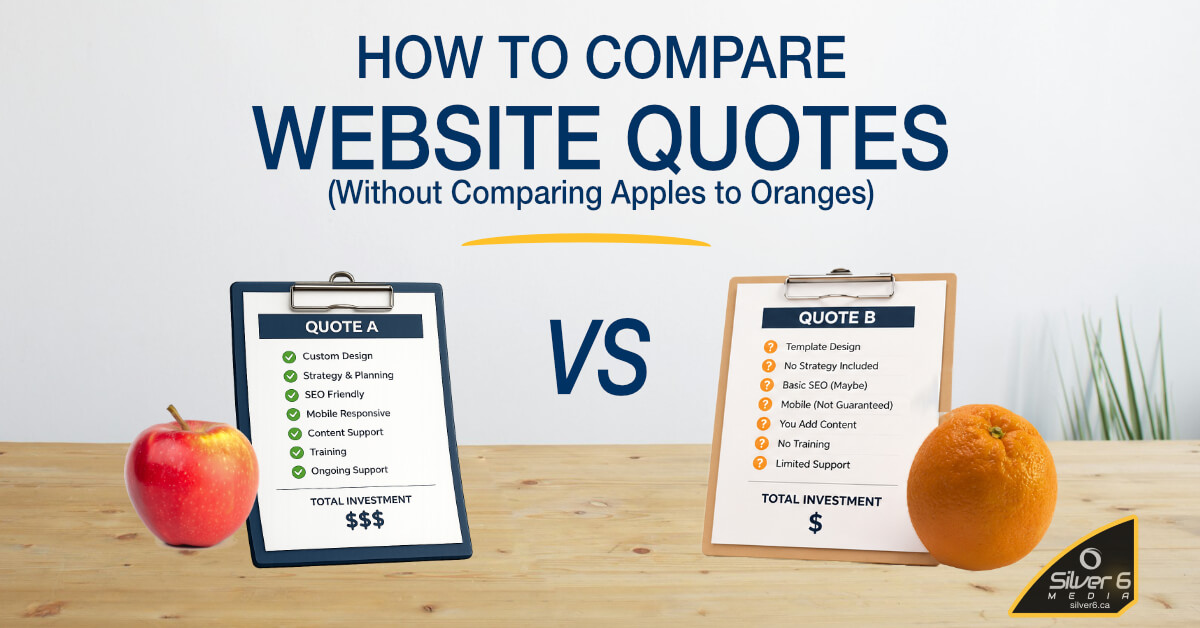
Two websites can look similar on paper but deliver completely different results. Here’s how to make a confident decision – before you invest.
Why Website Quotes Can Be So Different
You’ve requested proposals from two or three web designers.
One quote is $2,000.
Another is $4,500.
A third is over $8,000.
At first glance, they all seem to promise the same thing – a new website. So why the huge difference?
The answer is simple:
You’re probably not comparing the same product
A website isn’t just pages, colours, and images. Behind every proposal is a different level of strategy, planning, expertise, support, and long-term value.
The lowest price isn’t always the best deal – and the highest price isn’t automatically the best investment either.
The goal isn’t to find the cheapest quote.
It’s to find the best value for your business.
1. Start With What’s Actually Included
Before comparing prices, compare what’s included. Some proposals may include everything required to launch a successful website, while others leave out important pieces that become additional costs later.
Look for items such as:
- Website strategy or discovery session
- Custom design
- Mobile optimization
- Basic SEO setup
- Image optimization
- Performance optimization
- Web Analytics
- Security configuration
- Training after launch
If one proposal includes these items and another doesn’t, you’re not comparing the same service. Every web designer approaches projects differently. If you’re curious about how I structure projects and what’s included, you can learn more on my Web Design Services page.
2. Does the Process Begin With Strategy?
Many websites begin with design.
The better ones being with questions.
A good web designer wants to understand:
- Who are your ideal customers?
- What action should visitors take?
- What makes your business different?
- Why do customers choose you instead of competitors?
Without this foundation, even a beautiful website can fail to generate inquiries.
A successful website starts with understanding your business goals—not choosing colours or fonts. That’s why every project begins with a Website Strategy Session.
3. Who is Responsible for the Content?
Many business owners assume writing the website is included.
Sometimes it is.
Sometimes it isn’t.
Ask:
- Who writes the copy?
- Will existing content simply be copied over?
- Is content reviewed for clarity and conversions?
- Will someone help organize the information?
Strong content often has a greater impact on results than visual design itself.
4. Is SEO Included?
Be careful with the word “SEO”. It can mean very different things.
Ask what’s actually included.
Examples:
- Page titles
- Meta descriptions
- Image optimization
- Proper heading structure
- Internal linking
- Sitemap submission
- Basic technical SEO
These are important foundations.
If ongoing SEO services are being offered, ask exactly what those include as well.
5. Who Owns the Website?
This is an important question that many people never think to ask.
After the project is complete:
- Do you own the website?
- Do you own the domain name?
- Do you have access to your hosting?
- Can another developer take over if needed?
The answer should always be clear before signing an agreement.
6. What Happens After Launch?
Launching a website isn’t the finish line.
Websites require:
- software updates
- security monitoring
- backups
- occasional content changes
- technical support
Ask questions like:
- Is maintenance included?
- How are support requests handled?
- What’s the hourly rate for future changes?
- Is there an ongoing maintenance plan?
7. How Many Revisions Are Included?
One proposal may say “Unlimited Revisions”.
Another may include “three rounds” of revisions.
Neither is the “correct” number.
What’s more important is understanding:
- how revisions are handled
- when they occur
- what counts as a revision
- whether major design changes are included
A structured process often leads to a smoother project than endless revisions.
8. Look Beyond the Price
It’s natural to compare numbers first. But ask yourself this question:
If one website generates five new clients over the next year and another generates none, which one cost you more?
A website should be viewed as an investment – not simply a expense.
Value almost always outlasts price.
9. Compare the Experience, Not Just the Proposal
Pay attention to the experience you’ve had so far. Were they responsive, did they listen to what you said, did they ask thoughtful questions, did they explain things clearly?
The way someone handles the proposal process is often a good indication of how they’ll handle the project itself.
10. Choose the Partner You Trust Most
When this topic comes up I often think of Warren Buffet. (yep – one of the worlds most successful investor)
Warren Buffett explicitly states in his 1989 annual Berkshire Hathaway shareholder letter that “We’ve never succeeded in making a good deal with a bad person.” He further emphasizes this by noting, “I learned to go into business only with people whom I like, trust, and admire,”
At the end of the day, you’re not just hiring someone to build a website. You’re choosing someone you’ll likely work with for years. (I personally have several clients that I have worked with for over 10 years).
Technical ability matters. Trust matters even more.
Choose the company that gives you confidence – not simply the one with the lowest number at the bottom of the proposal. Choose the partner – not just the price.