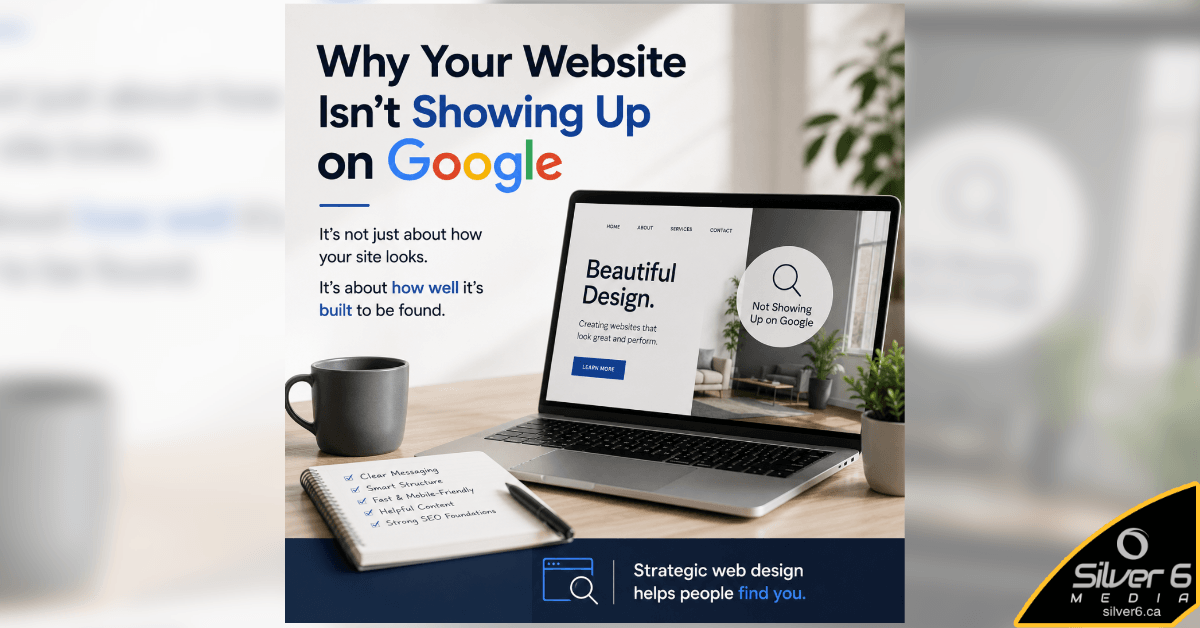
A modern website can look polished, professional, and visually impressive — yet still struggle to appear in Google search results.
This is one of the most common frustrations small business owners experience after launching a new website:
“The site looks great… so why isn’t anyone finding it?”
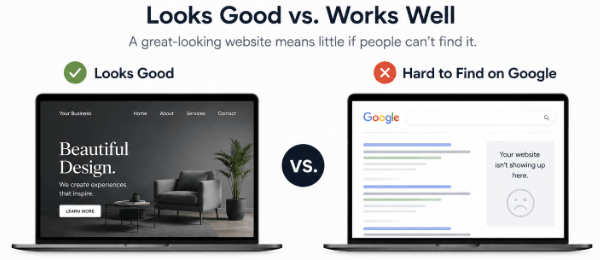
Many businesses invest in web design in Brantford expecting appearance (or design) alone to improve results, only to discover that visibility and strategy matter just as much.
A website also needs the right structure, content, technical setup, and user experience signals to help search engines understand what the site is about and who it should appear for.
The good news?
Many of the issues that hurt visibility are fixable — especially when they’re addressed during the website build process rather than treated as an afterthought later.
The “Pretty Website” Misconception
A visually appealing website can absolutely help build trust and create a positive first impression.
But Google does not rank websites based purely on looks/aesthetics.
Search engines are trying to determine things like:
- What services does this business offer?
- What location does this business serve?
- Is the website helpful and easy to navigate?
- Does the content clearly answer user intent?
- Is the site fast and mobile-friendly?
- Does the website appear trustworthy?
If those signals are weak or unclear, even a beautiful website can struggle to rank.
This is why strategic web design matters.
A website should not only look professional — it should also help search engines understand your business while guiding visitors toward taking action.
Common Reasons a Website Isn’t Showing Up on Google
1. The Website Was Built Without SEO Foundations
Many websites are designed primarily around appearance, while important search visibility fundamentals are overlooked.
Some common examples include:
- Missing or weak page titles
- Generic meta descriptions
- Poor heading structure
- Thin page content
- Weak internal linking
- Unclear service/location targeting
- Missing image optimization
These details may seem small individually, but together they help search engines understand the purpose and relevance of your site.
This is why foundational SEO should ideally be built into the website from the beginning — not bolted on afterward.
2. The Website Doesn’t Clearly Explain What the Business Does
One of the biggest problems many small business websites have is lack of clarity. Sometimes a homepage looks modern and polished, but never clearly communicates:
- What the company actually does (primary service)
- Who it serves (problem faced by certain people/groups)
- Where it operates (the service area)
- Why someone should choose them (the outcomes customers can expect)
Both users and search engines need clarity.
A website that combines strong messaging with solid technical structure tends to perform much better over time.
3. The Site Loads Slowly
Website download speed affects both:
- User experience
- Search visibility
If a website takes too long to load, visitors are more likely to leave before interacting with the content.
Slow-loading websites can be caused by:
Fast, streamlined websites generally create a better experience for both visitors and search engines/AI.
4. The Website Isn’t Mobile-Friendly
Most website traffic now comes from mobile devices. If a website is difficult to use on a phone — with tiny text, awkward layouts, or slow performance — it can negatively affect visibility and conversions.
A modern website should be designed mobile-first, not simply adapted for mobile afterward.
5. The Website Has Very Little Content
Google needs content to understand what your website is about. Some small business websites rely heavily on visuals but contain very little written information.
That creates a problem:
Search engines cannot interpret visual design the same way humans do.
Helpful written content — including service explanations, FAQs, articles, and clear page structure — helps establish topical relevance and authority.
This does not mean stuffing pages with keywords. It means creating useful, clear, human-focused content that answers real questions.
6. The Site Was Launched — Then Forgotten
I have many years of experience with this one. Some business owners treat their websites as a one-and-done project. Once a website is launched, they think “Whew, that took a while to complete, now I can move on to other projects.” Many business owners think of web design and SEO as completely separate things. In reality, they work best together.
A strategically built website should:
- look professional
- load quickly
- work well on mobile
- communicate clearly
- support search visibility
- guide users toward action
That doesn’t require aggressive SEO tactics.
It requires thoughtful planning and a strong foundation not to mention ongoing updates and website maintenance help keep a website secure, functional, and aligned with evolving business goals.
What Small Businesses Should Look For in a Website Build
When planning a new website or redesign, it helps to ask questions like:
- Is the site being structured for both users and search engines?
- Will the website clearly communicate services and locations?
- Is speed and mobile usability being prioritized?
- Are page titles and metadata being properly configured?
- Is the website easy to expand and maintain over time?
These fundamentals can make a significant difference in long-term performance.
Final Thoughts..
A website that looks good but struggles to appear on Google is often missing foundational strategy — not just “more SEO.”
The strongest websites combine clear messaging, thought out structure, good user experience, technical performance and search visibility fundamentals.
When those pieces work together, a website becomes more than just an online brochure. It becomes a tool that helps businesses build trust, attract visibility, and generate leads over time.
If your website looks professional but still isn’t generating visibility or leads, the issue may not be design alone. Sometimes small structural, messaging, or foundational improvements can make a significant difference over time. If you’d like an outside perspective, Silver 6 Media offers free 5-minute video audits for small businesses looking to improve their website performance.